Homer Cribus
Homer Cribus, the whiskey-nosed Sheriff of Trapingus County, represents the worst of Depression-era Southern law enforcement: corrupt, incompetent, and self-serving, yet politically untouchable. His role in the John Coffey case is defined not by active investigation but by passive endorsement of a flawed prosecution, and his personal life reveals a hypocrisy that mirrors the region's racial and moral contradictions.
Identity and Background
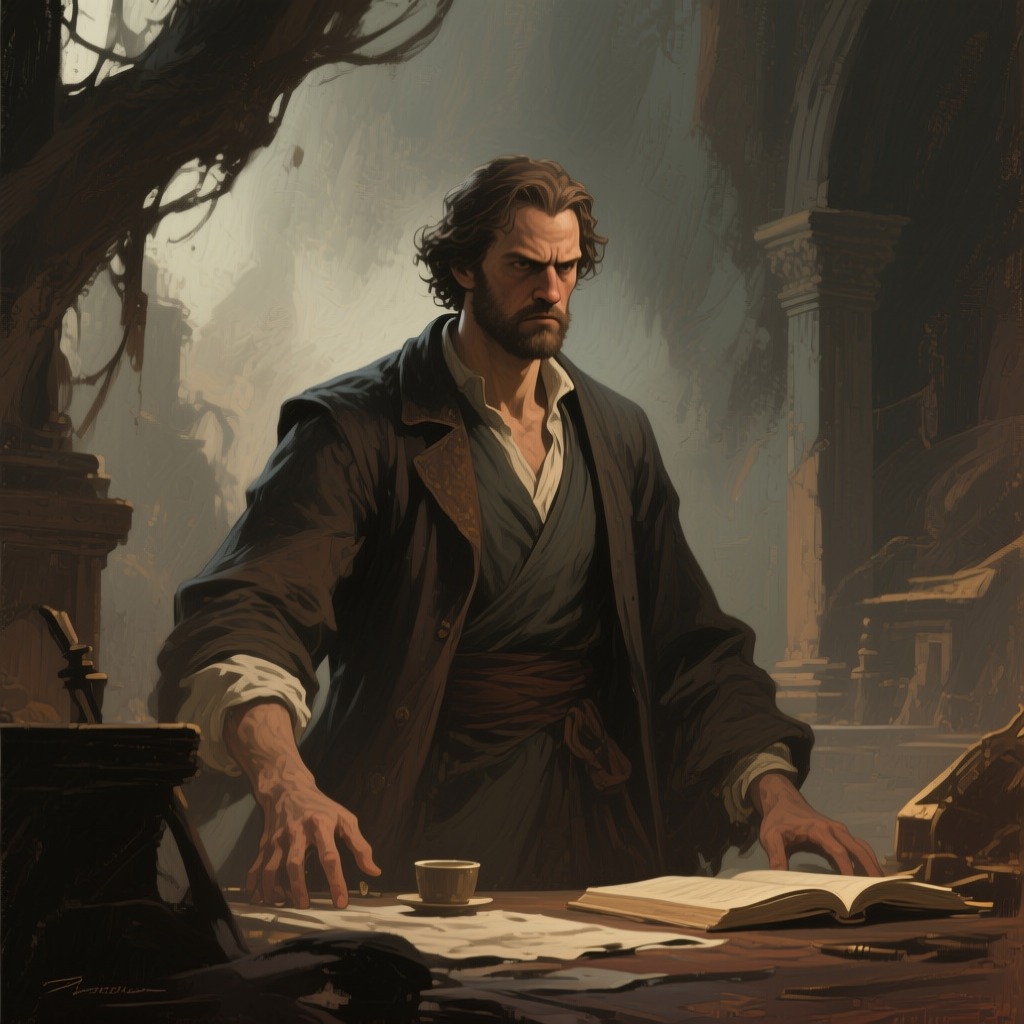
Cribus is described as a "whiskeynosed old boy with a gut like a washtub and a head of white hair so fine it looked like pipe-cleaner fuzz." He is a familiar figure at Cold Mountain Penitentiary, frequently attending executions of prisoners he calls "his boys." Paul Edgecombe, the E Block superintendent, knows him well from these visits, noting that every time Cribus sat in the folding chairs used for witnesses, Edgecombe "waited for the dry crack that would signal collapse." Despite his physical decrepitude, Cribus maintains his position through political maneuvering rather than competence.
Role in the Coffey Case
Cribus's involvement in the Detterick case is minimal and negligent. When the abduction and murders occurred, it was Deputy Rob McGee who organized the posse, led the pursuit, and made the arrest. McGee, not Cribus, took charge of the investigation, while Cribus likely remained in his office. At Coffey's trial, Cribus's presence was largely ceremonial; he did not contribute to the evidence-gathering or challenge the prosecution's narrative. Edgecombe notes that Cribus was "incompetent, the kind of fellow who'd get himself photographed petting some lady's cat when it was someone else—Deputy Rob McGee, for instance—who'd actually risked a broken collarbone by going up the tree where Mistress Pussycat was and bringing her down." This laziness and self-aggrandizement meant that the case against Coffey was never properly scrutinized, and the possibility of another perpetrator—later identified as William Wharton—was never explored.
Hypocrisy and Personal Corruption
Cribus's public persona as a family man and lawman is a sham. Not long after the Detterick case, he died of a heart attack in his office "while apparently screwing a seventeen year-old black girl named Daphne Shurtleff." Edgecombe reflects on the irony: "There was a lot of talk about that, with him always sporting his wife and six boys around so prominent come election time—those were the days when, if you wanted to run for something, the saying used to be 'Be Baptist or be gone.' But people love a hypocrite, you know—they recognize one of their own." This scandal, while damaging to his reputation, did not prevent him from being mourned publicly; his death was a convenient end to an investigation that might have exposed deeper corruption.
Narrative Significance
Cribus functions as a symbol of the institutional failures that condemn John Coffey. His incompetence allowed the real killer to escape justice, and his hypocrisy underscores the moral rot at the heart of the system. Edgecombe's contempt for Cribus is clear, but he also recognizes that Cribus is merely one cog in a machine designed to produce quick, convenient verdicts against marginalized defendants. Cribus's death, while ignominious, does not undo the harm he caused; it merely removes a figure who, in Edgecombe's words, was "a hypocrite" and "incompetent," but who was never held accountable for his role in Coffey's execution.